Fiskars Bypass Pruning Shears Review: The Everyday Garden Tool That Just Works
This guide is based on the maker’s published information and common owner feedback, not on lab testing. We may earn a commission if you buy through our links. How this works.
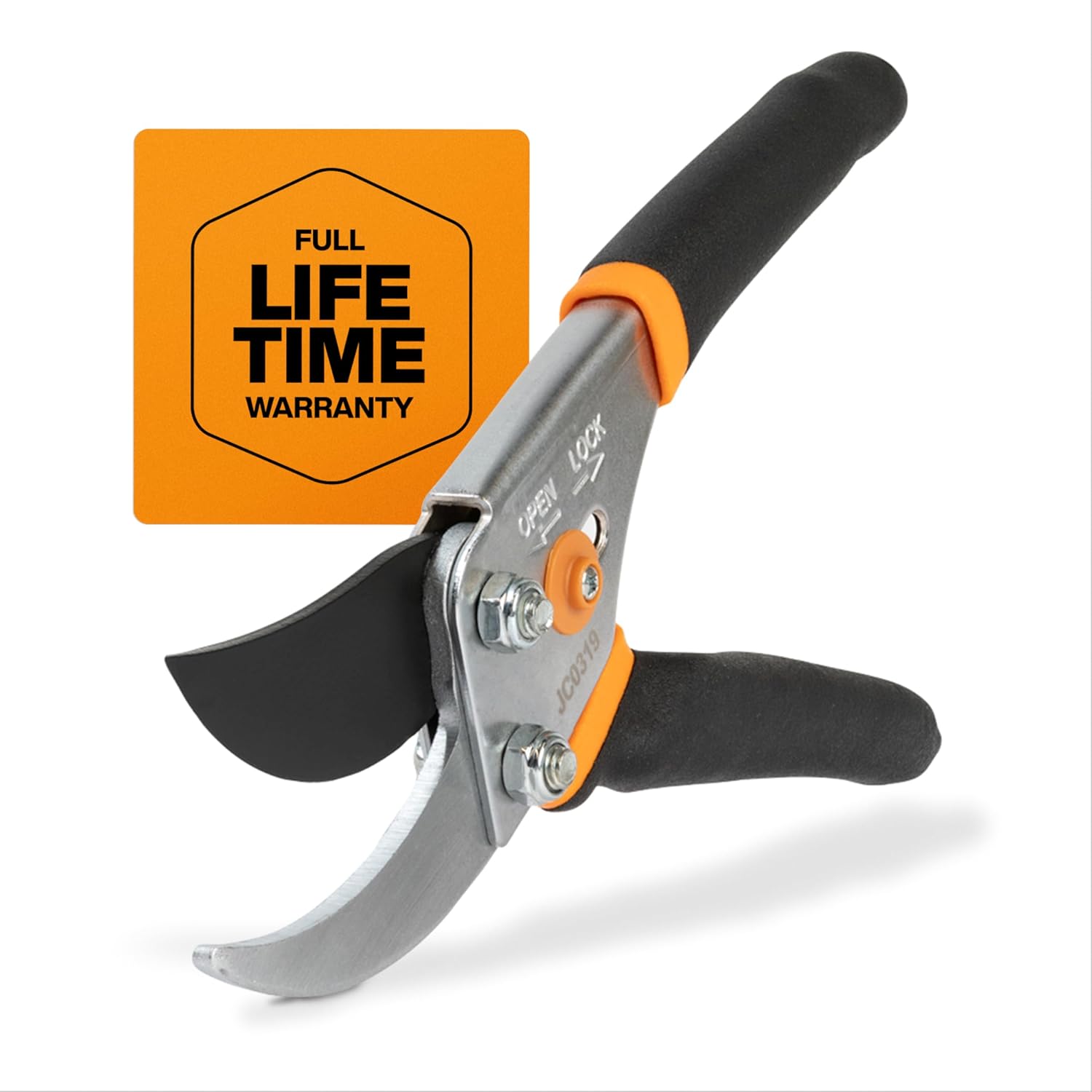
Every gardener has tried to cut a rose stem with kitchen scissors. The stem bends, the scissors twist, and what is left is a crushed, ragged stub. It looks bad, and it is bad for the plant: torn tissue heals slowly and invites disease.
A proper pair of pruners makes a clean cut in one squeeze. The Fiskars Bypass Pruning Shears are among the best-selling garden tools in the world because they do that reliably at a price anyone can afford. For many people they are the first real garden tool they buy.
This guide explains what they are for, what they cannot do, and how to keep them cutting well.
What Are Fiskars Bypass Pruning Shears?
They are one-handed garden pruners, sometimes called secateurs, from the Finnish company Fiskars, which has been making cutting tools since 1649.
"Bypass" describes how they cut. Two curved blades slide past each other like scissors: a sharpened upper blade and a thicker lower hook. This gives a clean, close cut on living, green stems, which is what most garden pruning involves.
The main features:
- Cutting capacity up to 5/8 inch in diameter
- A hardened, precision-ground steel blade that stays sharp
- A low-friction coating that helps the blade glide through wood, resists rust and stops sap from gumming it up
- All-steel construction with soft, non-slip grips
- An easy-open lock that holds the blades closed for storage
- A sap groove to channel sticky sap away from the blades
Fiskars backs them with a lifetime warranty.
Key Benefits
Clean cuts that are good for plants
A sharp bypass blade slices without crushing, so the wound closes quickly and the plant recovers faster.
Sharp out of the box, and for a long time
The hardened steel holds an edge through seasons of normal use, and it can be resharpened.
Less effort per cut
The low-friction coating reduces drag, so cutting takes less force and the blades do not stick.
Comfortable to hold
The cushioned grips reduce slipping and soften the pressure on your palm during long pruning sessions.
Safe to carry and store
The lock keeps the blades shut in a pocket, bucket or drawer.
Excellent value
They cost a fraction of professional pruners and do the everyday jobs just as well for most home gardeners.
Why Users Love Them
The points that come up in owner feedback:
- Sharpness. The first thing most reviewers mention.
- Simple and dependable. No fuss, they work.
- Good for the price. Many owners keep one pair in the shed and another by the back door.
- A cleaner garden. Deadheading and trimming become quick jobs.
- Trusted name. Buyers often own other Fiskars tools.
The complaints:
- The lock can be stiff or wear loose over time.
- The spring can pop out if the pruners are dropped or forced.
- Too big for small hands, and not truly designed for left-handed use.
- Not for thick or dead wood. Forcing a cut beyond the capacity can bend or misalign the blades.
- Rust if left outdoors. The coating helps, and wet tools still rust.
Our Analysis
This analysis is based on Fiskars' published specifications and common owner feedback. We have not run our own cutting tests.
What they get right
- The blade quality is the reason to buy them, and it is very good at this price.
- The design is uncomplicated, which leaves little to go wrong.
- They cover the great majority of home garden pruning.
Where they fall short
- They are light-duty tools. Daily professional use calls for forged pruners with replaceable parts.
- Limited adjustment. Higher-end pruners let you replace blades and springs and fine-tune the tension.
- Wrong tool for dead wood. Dry, hard branches are better cut with an anvil pruner, loppers or a pruning saw.
Who should buy them
Home gardeners, beginners, balcony and container gardeners, and anyone who needs a reliable pair for roses, perennials, herbs and light shrub work.
Who should buy something else
Professional landscapers and orchard workers, people with small hands or arthritis who would benefit from a smaller or ratcheting model, and left-handed gardeners who want a true left-hand pruner.
What to cut, and what not to cut
Good for:
- Rose stems and deadheading flowers
- Green shrub growth and young branches
- Herbs, tomatoes, peppers and other vegetables
- Perennials at the end of the season
- Houseplants
Not for:
- Branches thicker than 5/8 inch. Use loppers.
- Old, dead, hard wood. Use an anvil pruner or a saw.
- Wire, plastic ties or roots in gritty soil, which blunt the blades.
How to make a good cut
- Place the stem deep in the jaws, close to the pivot, where the leverage is greatest.
- Position the sharp blade on the side of the plant you are keeping, so the cut is clean on the part that remains.
- Cut about a quarter inch above a bud or leaf node, at a slight angle sloping away from the bud.
- Squeeze smoothly. Do not twist. If it will not cut with a firm squeeze, the branch is too thick.
Care
- Wipe the blades after use. Sap comes off with soapy water or rubbing alcohol.
- Dry them and add a drop of light oil to the pivot and blades.
- Disinfect with rubbing alcohol after cutting diseased plants, to avoid spreading the problem.
- Sharpen the beveled edge of the top blade with a fine file or sharpening stone when cuts stop being clean.
- Store them closed, indoors and dry.
Specifications
| Spec | Detail |
|---|---|
| Type | Bypass hand pruner |
| Cutting capacity | Up to 5/8 in diameter |
| Blade | Hardened, precision-ground steel |
| Coating | Low-friction, rust resistant |
| Construction | All steel, with non-slip grips |
| Lock | Easy-open lock |
| Sap groove | Yes |
| Best for | Live, green stems and light branches |
| Hand use | Designed mainly for right-handed use |
| Warranty | Lifetime |
Where They Excel
- Roses. Deadheading and seasonal pruning.
- Vegetable gardens. Harvesting and removing side shoots.
- Herb beds. Clean cuts that encourage new growth.
- Flower borders. Tidying perennials.
- Balconies and houseplants. One compact tool for everything.
- Cut flowers. Trimming stems before arranging.
The typical owner comment is that they wonder why they struggled with scissors for so long.
Frequently Asked Questions
What is the difference between bypass and anvil pruners?
Bypass pruners cut like scissors and are best for live, green stems. Anvil pruners press a blade onto a flat surface and are better for dead, dry wood.
Can left-handed people use them?
They can be used in the left hand, and the lock and blade orientation favor right-handed use.
How do I sharpen them?
Run a fine file or sharpening stone along the beveled edge of the top blade, following the existing angle. Do not sharpen the flat side.
Can I cut small branches?
Yes, up to 5/8 inch thick. Use loppers for anything larger.
How do I remove sticky sap?
Wipe the blades with rubbing alcohol or warm soapy water, then dry and oil them.
Conclusion: Are Fiskars Bypass Pruners Worth Buying?
The Fiskars Bypass Pruning Shears are a simple, sharp, comfortable tool that handles most of what a home garden asks of a pruner. They are not built for thick branches or professional daily use, and they need a wipe and a drop of oil now and then.
For the price, they are one of the most useful things you can own as a gardener. If you do not have a proper pair of pruners yet, start here.
See the current price below.


