Revlon One-Step Volumizer Review: A Salon-Style Blowout With One Hand
This guide is based on the maker’s published information and common owner feedback, not on lab testing. We may earn a commission if you buy through our links. How this works.
A salon blowout looks effortless when someone else does it. At home it is a juggling act: a heavy dryer in one hand, a round brush in the other, arms above your head, the back of your hair impossible to reach. Twenty minutes later your arms ache and one side is still frizzy.
The Revlon One-Step Volumizer became one of the most talked-about hair tools in years by putting the dryer inside the brush. You hold one tool, brush your hair, and it dries and shapes as you go. For many people it cut styling time in half.
This guide looks at how it works, which hair types it suits and how to use it without damaging your hair.
What Is the Revlon One-Step Volumizer?
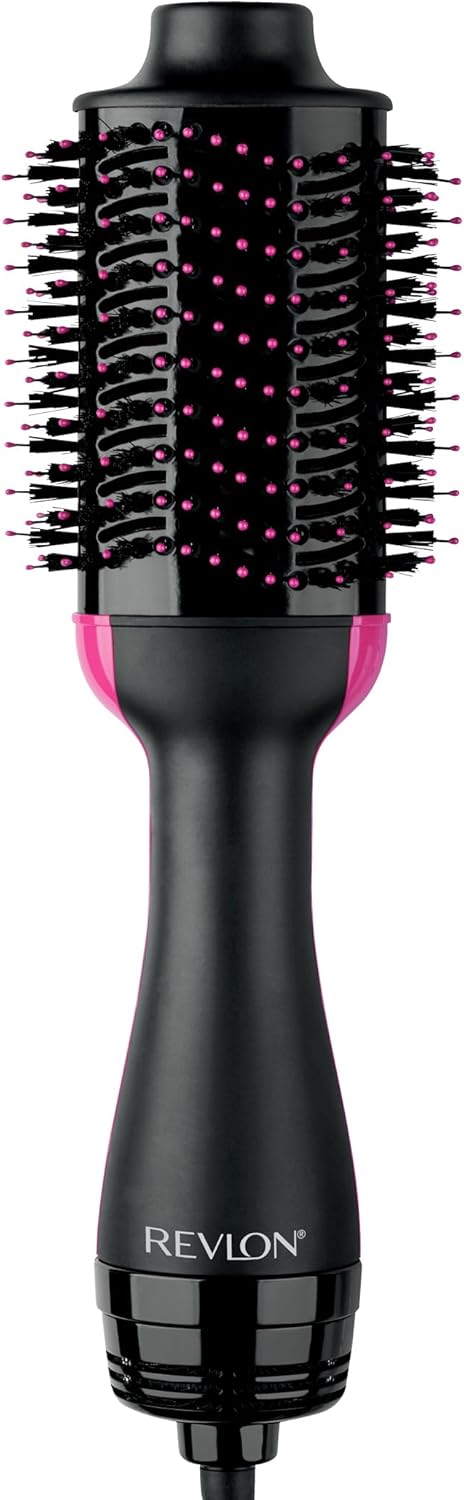
It is a hot air brush: a large oval brush head with a hair dryer built into the handle. Air flows out through vents in the barrel while a mix of bristles grips and smooths the hair.
The key details of the original model:
- An oval barrel. The flat sides smooth the lengths, and the rounded edges lift the roots and curl the ends under.
- Nylon pin and tufted bristles to detangle and create tension.
- 1100 watts of drying power.
- Three settings: low, high and cool.
- Ionic technology and a ceramic coating, intended to reduce frizz and spread heat more evenly.
- A swivel cord to prevent tangling.
Revlon also sells an updated "Plus" version with a slightly smaller, detachable head, a slimmer handle and an added medium heat setting.
Key Benefits
Dry and style in one step
There is no separate brush to coordinate. One pass dries and shapes, which makes a blowout achievable for people who never managed the two-handed method.
Faster mornings
Owners commonly report cutting their styling time substantially, especially those with long or thick hair.
Volume at the roots
Lifting sections up and away from the scalp as you dry gives the bounce of a round-brush blowout.
Smoother, shinier hair
Tension from the bristles plus airflow in the direction of the hair shaft flattens the cuticle, which reduces frizz.
A free hand
You can hold a section taut or steady yourself with your other hand. It is far easier to reach the back.
Low price for the result
It costs a fraction of premium hot air stylers.
Why Users Love It
The themes that appear again and again in owner feedback:
- "It changed my routine." Many describe salon-looking results at home for the first time.
- Speed. A full head of hair done in 10 to 20 minutes.
- Smoothness and bounce. Especially on wavy and frizz-prone hair.
- Ease. People who describe themselves as hopeless with a round brush manage it.
The criticisms are consistent and should shape how you use it:
- It gets very hot. The high setting produces a lot of heat close to the hair. Overuse can cause dryness and breakage.
- The original head is large. The big oval barrel is awkward on short hair, bangs and close to the roots.
- Weight and noise. It is bulkier than a brush and about as loud as a dryer.
- Durability varies. Some owners report units failing after a year or two of heavy use.
- US voltage only. The standard model is made for 120-volt outlets and should not be used abroad with a simple plug adapter.
Our Analysis
This analysis is based on the manufacturer's published specifications and common owner feedback. We have not measured temperatures or tested durability ourselves.
What it gets right
- It solves a real coordination problem and makes a blowout accessible.
- The oval shape does two jobs: smoothing and volume.
- It is affordable and easy to find.
Where it falls short
- Heat management is basic on the original, with only low, high and cool. The Plus version's medium setting is a useful improvement.
- Not ideal for every hair type. Very fine or fragile hair can be over-dried. Very tight curls and coils may not get fully straight and are exposed to a lot of heat and tension.
- It is not a wet-to-dry tool. Using it on soaking hair means long exposure to heat.
Who should buy it
People with medium to thick, straight, wavy or loosely curly hair of shoulder length or longer who want a quick, smooth, voluminous blowout.
Who should consider another option
People with short hair should look at the smaller-barrel Plus version. Those with very fine, damaged or heavily bleached hair should use the lowest setting sparingly or choose a tool with more precise heat control.
How to use it without frying your hair
- Never start on dripping wet hair. Towel-dry, then air-dry or rough-dry with a normal dryer until your hair is about 70 to 80 percent dry.
- Apply a heat protectant throughout.
- Detangle with a comb.
- Work in sections, clipping the top layers out of the way and starting underneath.
- Use low heat if your hair is fine or fragile. Use high for thick hair, and only as long as needed.
- Place the brush under the section at the root, lift, and glide slowly to the ends. Roll the ends under or outward.
- Finish with the cool setting to set the shape.
- Keep it moving. Do not hold it in one place.
Limit use to a few times a week if you can, and clean hair and lint from the bristles and the air inlet regularly.
Safety
Like any plug-in hair dryer, keep it away from water, do not use it in the bath or shower, and unplug it after use. Let it cool on a heat-safe surface.
Specifications
| Spec | Detail |
|---|---|
| Type | Hot air brush (hair dryer and styler) |
| Power | 1100 W |
| Barrel | Oval, vented |
| Bristles | Nylon pin and tufted mix |
| Settings, original | Low, high, cool |
| Settings, Plus version | Low, medium, high, cool |
| Technology | Ionic, with ceramic coating |
| Cord | Swivel cord, about 6 ft |
| Voltage | 120 V (US), not dual voltage |
| Safety plug | ALCI safety plug |
| Use on | Damp, towel-dried or partly dried hair |
Where It Excels
- Weekday mornings. A polished look in limited time.
- Thick, wavy hair that takes ages with a dryer and brush.
- Long hair. Smoothing lengths and curving the ends.
- Refreshing second-day hair. A quick pass on dry hair, on low, to restore shape.
- People with limited arm strength or shoulder mobility, for whom two tools are difficult.
The typical owner story is giving up on at-home blowouts, trying this, and never going back to a separate brush and dryer.
Frequently Asked Questions
Can I use it on dry hair?
Yes, briefly on the low setting to refresh a style. Most of the styling should be done on damp hair.
Can I use it on soaking wet hair?
No. Dry your hair to about 70 to 80 percent first to limit heat exposure.
Will it work on short hair?
The original's large barrel is awkward on hair above the chin. The Plus version has a smaller head.
Can I take it abroad?
The standard US model is 120 volts only and should not be used on 220 to 240 volt power with a simple plug adapter.
How do I clean it?
Unplug it, let it cool, and remove hair from the bristles. Wipe the barrel with a damp cloth and keep the air inlet clear of lint.
Conclusion: Is the Revlon One-Step Volumizer Worth It?
The Revlon One-Step Volumizer delivers what it promises: a smooth, bouncy blowout in one step, at a low price. Its weakness is heat. Used on partly dried hair, with heat protectant and the lowest setting that works, it is a real time-saver. Used on soaking hair at full heat every day, it can dry your hair out.
If you want easier, faster styling and your hair is in reasonable condition, it is a very good buy. Choose the Plus version if you have shorter hair or want more heat control.
See the current price and versions below.


